Continue with Facebook
 Continue with Email

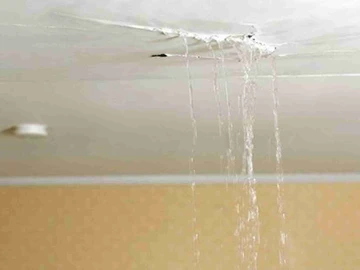
In the face of persistent municipal water shortages in Harare, private boreholes have become an absolute necessity. Far from being a mere luxury addition, it is a primary selling point in property letting and a critical asset for maintaining property value in alignment with market demands.
However, tapping into groundwater comes with legal and civic responsibilities as well
Regulatory Compliance Over Complicity
It is a common misconception that because a borehole is situated within the confines of private property, the water beneath it is entirely unregulated. In reality, it is a shared resource governed by principles of communal equitability, strictly regulated under the Water Act [Chapter 20:24] and administered through Sub-Catchment Councils.
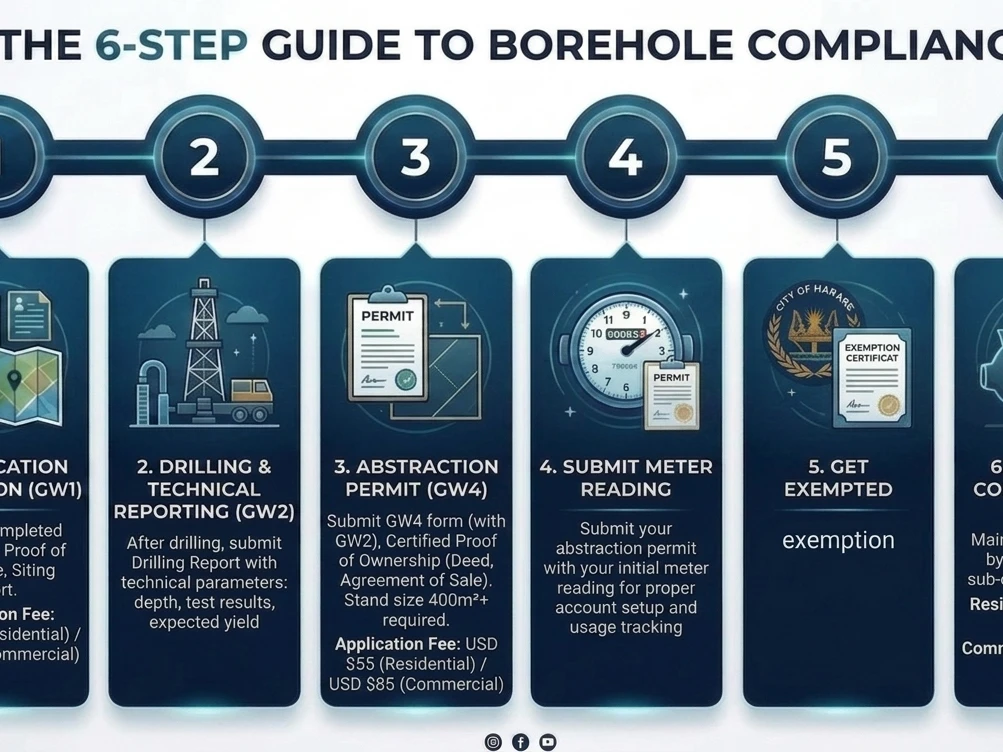
- Permit to Drill: Formal authorization obtained prior to commencing any drilling operations.
- Abstraction Permit: Legal licensing to water extraction, requiring periodic renewals.
- Quarterly/annual Levies: Standard payments remitted to the respective Sub-Catchment Council based on your abstraction framework
How does your independent borehole impact your municipal financial obligations?
Your monthly municipal bill consists of a number of several service charges, now bundled “levy” in the new statement format. Traditionally, the break up would indicate the following:
- property tax,
- water infrastructure levy
- sewerage
- water consumption
- public safety levy
- refuse collection and
- emergency services levy.
If your property relies solely on a borehole and not municipal tap water, you are entitled to apply for a water consumption charge exemption
Pro-Tip for Property Owners: The exemption is not automatic. Once you have secured your compliant Abstraction Permit from your Sub-Catchment Council, you must physically present this documentation to the City of Harare billing department to formally request the removal of the consumption charge from your monthly ledger.